Last Updated: Oct 2026


Web Servers and the Internet
The Internet is nothing more than a large collection of computers attached to a telecommunications network and a set of protocols that establishes the rules for data to be sent and received by them. Most computers are linked to the Internet through a modem that directs traffic to and from a local phone or cable company. An Internet service provider (ISP) directs the incoming and outgoing data through a local hub to regional hubs.
All the data that makes up a website is located on one or more specialized computers known as servers. Servers can be expensive to purchase and maintain, so companies, known as domain hosts or website hosts, lease server resources to subscribers in return for monthly fees. This allows most anyone to create a website that is available to the public on the World Wide Web (WWW), which is the collective network of all websites in the world that can be accessed through the internet.
In order for computers to understand each other, universal codes and protocols have been established. One of the most important of these protocols for websites and domain hosting is hypertext transfer protocol (HTTP). It is this protocol that allows queries to be sent to specific servers so that the websites on those servers can be accessed.
To direct a request for access from a client computer to a website server, a system of names attached to Internet protocol (IP) addresses is in operation. The physical location of the server of a particular website is embedded in the name, which is also known as the uniform resource locator (URL).
Names and IP Addresses
The first step in acquiring a host is to register a name. These are regulated and maintained by name registrars, which ensure that there is no repetition. The actual registration can be done directly through the registrar but most likely will be done by a third party like a hosting service. They are easily readable by people, but for computers to understand them, domain names have to be linked to binary IP addresses through special servers called domain name servers (DNS). This system allows for a them to be transferred to another server should the webmaster decide to use a different platform.

Registrars and Website Hosts
The registrar may be the same company as the host, or it may be a totally different company. Most companies will allow customers to perform a name search & register it there. In fact if you choose a package first it is likely to get it for free for one year. Because the equipment required by registrars is so similar, most companies engage in both activities. Many companies marketed as registrars offer domain packages to those that use their name registration services, and other companies marketed as website hosts offer free or discounted registration for subscribers to their packages.
Find a host first or start with a search on a registrar. However, if it is already registered, you can subscribe to nearly any other hosting service. All you have to do is tell the host the names of the servers where the name information is stored.
Hosting packages
Several different packages are available from hosting companies. Each package has a different set of features, and some may be more important to you and your website than others, but free domains for one year are common & you shouldn’t accept a package which doesn’t include this. Following are the most common types of packages:
- Free hosting – Some companies offer free service. This service puts several subscribers onto a single server, and the resources of the server are shared between them. Free packages usually have very few features.
- Shared hosting – Can also be a paid subscription service. Fee-based shared packages provide subscribers with more features than free hosts, and service guarantees may be available. Free names add a lot of value to these cheap packages.
- Dedicated hosting – Subscribers who want their data to have the highest level of security and who require all the resources of a server can lease private servers that can be accessed and used only by them. These are the most expensive packages, but they provide the most power and flexibility.
Understanding which package will work best for you requires some research. Every domain host provides different features in their offered packages, and prices vary widely.
Our Top 3 Picks
- 1
 Very good8.5
 A beginner-friendly, intuitive website builder
- Best for - Beginners
- Price - From $6.99
- Free version - Yes
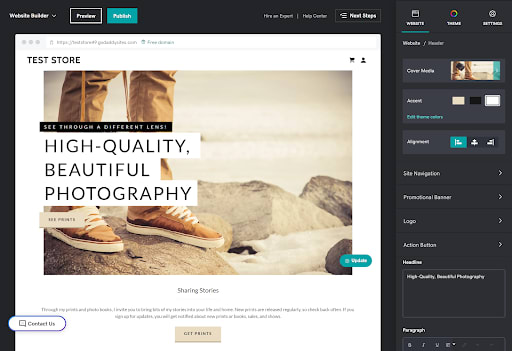
A beginner-friendly, intuitive website builderRead GoDaddy ReviewThe GoDaddy website builder is designed for and targeted at beginners with little to no web development experience. It boasts an intuitive, beginner-friendly editor, basic e-commerce tools, and a selection of integrated marketing tools. More advanced users might find the editor a bit too limiting, but it does allow for basic customization.
However, design flexibility is a little limited, the SEO tools are poor, and there are currently only 22 templates available. GoDaddy’s prices are competitive, though, and we’d recommend using the free plan to test the platform if you’re looking for a simple, beginner-friendly website builder that will enable you to get online fast. GoDaddy's strength lies in the marketing, e-commerce, and other tools as well as its very competitive pricing plans. Top that off with excellent customer service and you get a good option for beginners creating their first site.
GoDaddy Pros & Cons
PROS
Enables rapid site creation with no special skillsIntegrated e-commerce and marketing toolsVery beginner friendly and easy to useCONS
Design flexibility is quite limitedPoor platform for SEO - 2
 Good8.3
 Marketing & ecommerce tools for small businesses
- Best for - Launching an online store quickly
- Price - From $1/month
- Free version - No
Marketing & ecommerce tools for small businessesRead 1&1 IONOS ReviewIONOS is a reliable e-commerce website builder geared toward small business owners. With IONOS, creating a website is hassle-free—even if you've never done it before. You can easily cross-sell and upsell products on individual product pages to boost your profits, and you get a comprehensive abandoned cart recovery feature (which not all website builders offer).
It's easy to scale your business with IONOS, and even sell across the most popular social networks and marketplaces, such as Facebook, Instagram, Google Shopping, and Amazon. It has a limited number of templates (we counted 19), but they're all well-designed and built for mobile responsiveness.
Why we chose IONOS: IONOS is a top choice if you want to build an e-commerce store fast. Its subscription fees (even for the premium plans) are quite affordable, especially in the first 6-12 months. After this period, subscription fees increase but IONOS is transparent with its pricing—no nasty surprises.
Our experience: We found IONOS' dashboard, known as the Presence Suite, to be an intuitive system for managing your website and online presence. Plus, the website builder is specifically designed for beginners, so it's pretty easy to figure out.
1&1 IONOS Pros & Cons
PROS
Powerful e-commerce features at a reasonable priceMobile-responsive templatesTrack your competitors' activity on Google and social mediaCONS
Limited number of templatesOnly 10 pages with the first-tier plan - 3
 Good8.0
 A surprisingly expensive builder for basic sites
- Best for - Beginners who want a basic website
- Price - $14.95-$109.80
- Free version - No
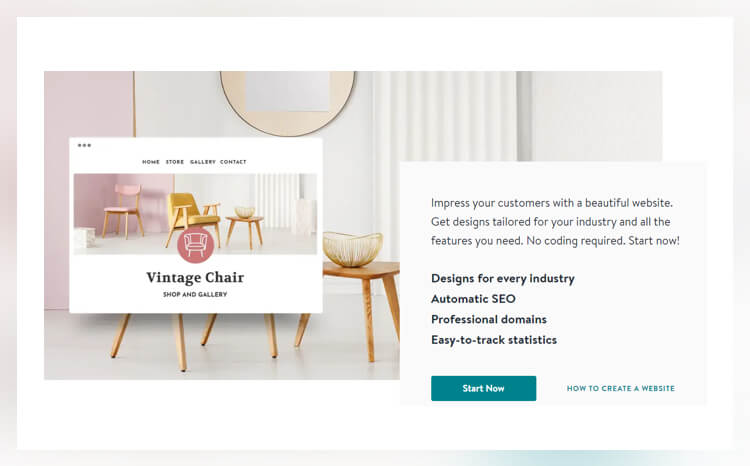
A surprisingly expensive builder for basic sitesRead Network Solutions ReviewThe Network Solutions website builder is designed to help you launch a basic website in minutes. It provides a straightforward experience for beginners and well-made templates, but the platform leaves a lot to be desired. For example, Network Solutions doesn’t offer many customization options and its ecommerce plan doesn’t support inventory management.
While these problems might be overlooked, it’s hard to ignore Network Solutions’ expensive and non-transparent pricing structure. This website builder is far more expensive than competing builders that offer more flexibility and features, especially for online stores. Overall, we think there are many alternative website builders that provide more bang for your buck than Network Solutions.
Network Solutions Pros & Cons
PROS
More than 150 well-designed templatesVery easy-to-use drag-and-drop editorMarketing tools availableCONS
Very expensive after introductory pricingLimited design flexibility



Top10.com Total Score
Our product scores consist of a combination of the following 3 components:
Popularity
Top10.com measures user engagement based on the number of clicks each listed brand received in the past 7 days. The number of clicks to each brand will be measured against other brands listed in the same query. Therefore, the higher the share of clicks a brand receives in any specific query, the higher the Click Trend Score. Top10.com accepts advertising compensation from companies, which impacts their (and/or their products’) position, and in some cases, may also affect their Click Trend Score.
Brand Reputation
Semrush is a trusted and comprehensive tool that offers insights about online visibility and performance. The Top10.com Total Score will consist of the brand's reputation from Semrush. The brand reputation is based on Semrush's analysis of clickstream data, which includes user behavior, search patterns, and engagement, to accurately measure each brand's prominence, credibility, and trustworthiness. If a brand does not have a Semrush score, the Top10.com Total Score will be based solely on the Click Trend Score and Products & Features Score (read below).
Features & Benefits
Top10.com editorial team researches and reviews financial products based on factors such as: range of products and services offered, ease-of-use, online accessibility, customer service, special awards, and more. Each brand is then given a score based on the offerings in each parameter. The specific parameters which we use to evaluate the score of each product can be found on its review page.